Catalogue — six working categories
Components filed the way buyers actually describe them.
This is a reference catalogue rather than a storefront. Each category sets out what the product is, where it is typically used, what a buyer should look at before enquiring, and which details make an identification quick rather than slow.
- What this page is
- A technical reference for describing a seatbelt requirement accurately.
- What it is not
- A price list, a stock list, or fitment guidance for any specific vehicle.
- How to use it
- Find the closest category, then send the details it asks for.
Category 01
Automotive Seatbelts
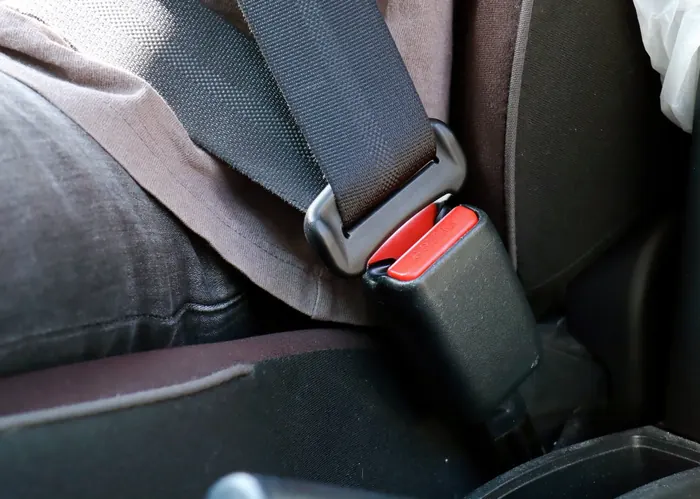
The broadest category, and the one most enquiries open with. It covers complete seatbelts for passenger and commercial vehicles — the webbing, the latch plate, the buckle side and the mounting hardware that make up a working restraint at a single seating position.
Because “seatbelt” describes a function rather than a specific part, this is also the category where a requirement most often needs narrowing. Two vehicles of the same model year can carry different belt assemblies depending on trim, seating layout and market. The vehicle details and a photograph do most of the narrowing work.
Buyer considerations
- Which seating position the belt serves — front left, front right, rear outer, rear centre.
- Whether the requirement is for the belt side, the buckle side, or both as a set.
- Whether the existing part is being matched, or a requirement is being described from scratch.
- How many pieces are involved, and whether this is a one-off or a recurring need.
- Identification
- Vehicle make, model, year and seating position; photographs of the part and its anchor points.
- Typical buyers
- Workshops, distributors, fleet operators and businesses sourcing on behalf of a customer.
- Common ambiguity
- “A seatbelt for a car” — without position or configuration, this can match dozens of different parts.
Category 02
Three-Point Seatbelts
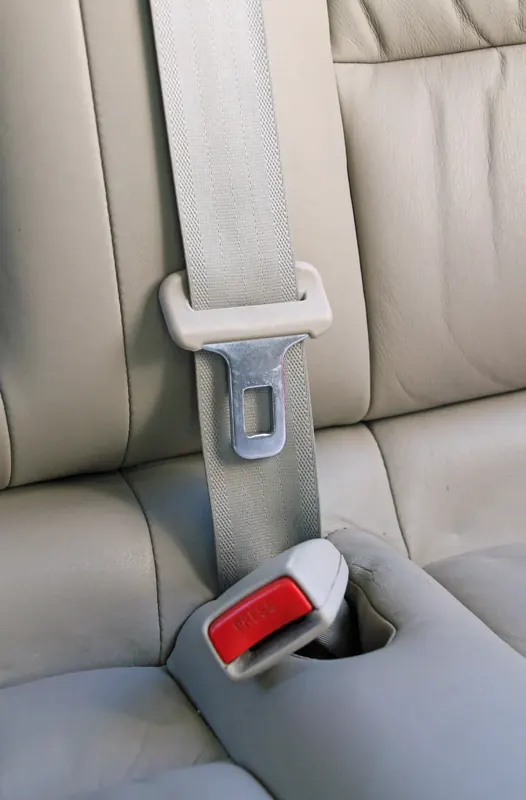
The lap-and-diagonal arrangement found at most modern seating positions. A three-point belt restrains across both the pelvis and the upper torso, and its geometry is defined by three anchor locations rather than by the webbing alone.
That geometry is why handedness matters so much in this category. A belt designed for the left side of a vehicle is not a left-handed version of the right-side part — the retractor orientation, the anchor angles and the buckle stalk position all differ. Stating the side at the start of an enquiry removes a whole round of questions.
Application context
Front outboard positions, rear outboard positions and, in many modern vehicles, the rear centre position. Commercial vehicles and buses may use three-point arrangements with different anchor geometry from passenger cars.
- Identification
- Side of vehicle, seating row, retractor position and the arrangement of the three anchor points.
- Photograph this
- The upper anchor, the retractor location and the buckle stalk, each in one frame where possible.
- Common ambiguity
- “Driver side” means opposite sides in left- and right-hand-drive markets — state the physical side as well.
Category 03
Retractable Seatbelt Assemblies
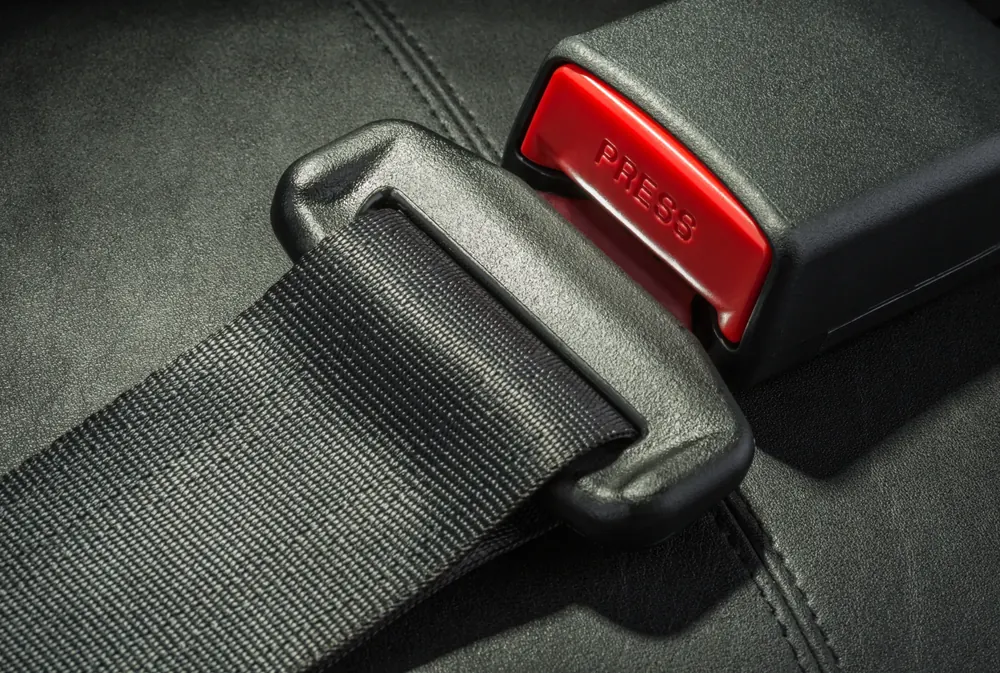
Assemblies built around a retractor — the mechanism that stores the webbing, allows it to extend under normal movement and restricts it under sudden load. In this category the retractor, the webbing and the mounting arrangement are treated as one unit, because in practice they are supplied and installed as one.
Retractable assemblies are where a requirement most benefits from a photograph. The retractor housing shape, its mounting orientation and the way the webbing exits the housing vary considerably between vehicles, and those differences are far easier to see than to describe.
What to look at before enquiring
- The shape and orientation of the retractor housing, and how it sits against the pillar or seat frame.
- Where the webbing exits the housing, and in which direction it runs.
- The bolt pattern and mounting arrangement holding the retractor in place.
- Any part number, moulded code or label on the housing or on the webbing itself.
- Identification
- Retractor housing photographs, mounting orientation, vehicle details and seating position.
- Supplied as
- An assembly — retractor, webbing and mounting hardware described together.
- Common ambiguity
- Describing only the webbing when the retractor is the part that actually differs.
Product identification
Start with the information you have.
You do not need to arrive at a part number. You need to arrive with enough that someone can work towards one with you.
A
Photographs
Daylight images of the part in place, the mounting points and anything printed or moulded onto it. Several ordinary photographs beat one careful description.
B
Vehicle information
Make, model, year and variant where known. Where the vehicle is unconfirmed, say so — it is a useful fact in itself.
C
Application
The seating position, the side of the vehicle and the row. This is the detail most often left out and most often needed.
D
Existing seatbelt information
What is currently fitted, whether it is being matched or replaced, and what prompted the requirement.
E
Visible markings
Codes on the latch plate, text moulded into the buckle housing, and labels stitched to or printed on the webbing.
F
Quantity & destination
How many pieces, and where they need to reach. Both shape how the requirement is coordinated from the outset.
Nothing here asks you to remove, dismantle or modify a fitted restraint in order to gather information. Photograph what is visible; leave the rest to a qualified automotive professional.
Category 04
Lap Seatbelts
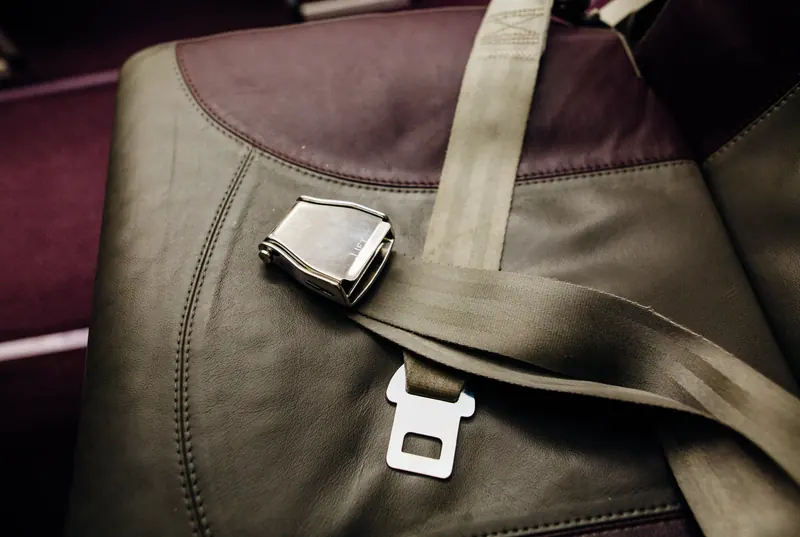
Two-point belts that restrain across the pelvis alone. They remain in use at specific seating positions — older rear centre seats, bench seating, and certain commercial and specialist vehicle layouts — where a three-point arrangement was not part of the original design.
Lap belt requirements are usually defined by length, buckle type and anchor arrangement rather than by vehicle model. That makes them one of the few categories where a measurement is genuinely useful in the first message.
Buyer considerations
- The overall webbing length required, measured with the belt laid flat and fully extended.
- The buckle style — the release mechanism and latch shape vary noticeably between designs.
- The anchor arrangement at each end and how the belt attaches to the vehicle or seat frame.
- Whether the position was originally specified as a lap belt, or has been treated as one over time.
Worth confirming locally
Whether a lap belt is the appropriate arrangement for a given seating position is a question for the vehicle’s specification and the rules of the market it operates in — not one that should be settled by what happens to be available. Confirm it with a qualified automotive professional before ordering.
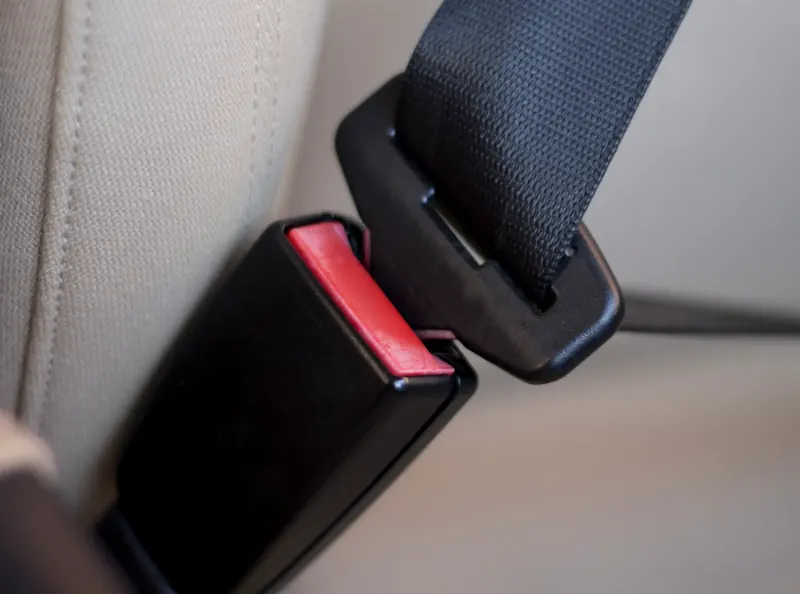
Category 05
Buckles & Receivers
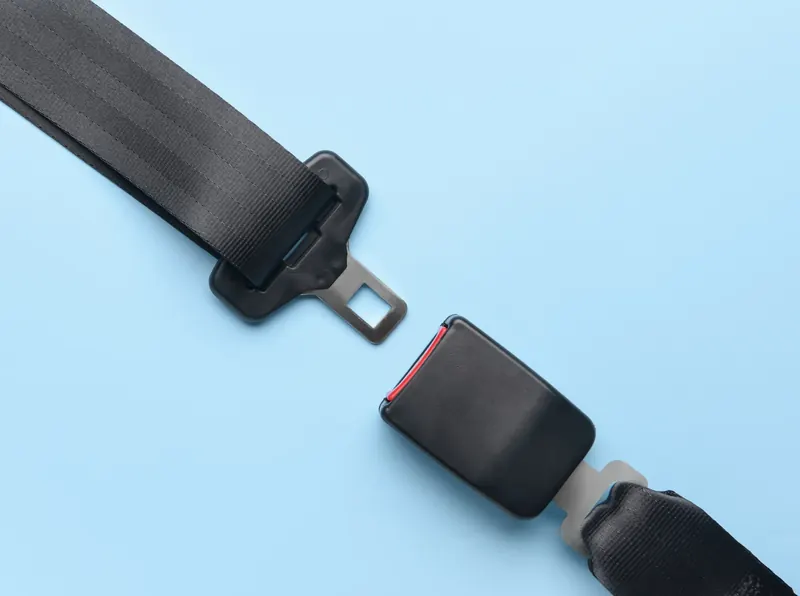
The engaging half of the restraint: buckle housings, receivers, stalks and the latch plates that seat into them. This is the category buyers most often photograph rather than describe, and rightly so — the differences between one buckle and another are visual before they are verbal.
Buckle and latch plate designs are matched pairs. A latch plate that looks similar to another will not necessarily seat correctly, and the fit between the two is not something to approximate. Where a requirement covers only one half, it is worth photographing both.
What identifies a buckle
- The housing shape and the position, colour and shape of the release button.
- The stalk — rigid or webbing-mounted, its length and its anchor arrangement.
- The latch plate profile, including the slot shape and the plate thickness.
- Any electrical connector present at the base of the stalk, and its plug shape.
- Identification
- Photographs of the buckle face, the stalk and the latch plate, plus any moulded codes.
- Enquire as
- A pair where possible — buckle and latch plate together, with the seating position stated.
- Common ambiguity
- Requesting “a buckle” when the receiver, the stalk or the latch plate is the part that has failed.
Category 06
Seatbelt Accessories & Related Components
Supporting hardware that accompanies a seatbelt requirement rather than replaces it: mounting bolts and anchor hardware, guide loops, trim pieces and the smaller parts that are easy to overlook until an assembly is being fitted.
Accessories are worth listing explicitly in an enquiry. They are frequently assumed to be included, frequently are not, and are the most common reason a supply that was otherwise complete turns out to be short by one component.
Please note
Related components are supplied to accompany a seatbelt requirement. They are not a means of adapting, extending or altering how a restraint behaves. Any part that changes the geometry or operation of a fitted restraint should be assessed by a qualified automotive professional against the vehicle’s specification and the rules of the market it operates in.
- Identification
- Photographs alongside the main part, so the relationship between the two is visible.
- Enquire as
- An itemised list attached to the main requirement rather than a separate enquiry.
- Common ambiguity
- Assuming mounting hardware is included by default — state it either way.
Next step
Found the closest category? Send us the detail.
Name the category, add what you know about the vehicle and attach whatever photographs you have. That is enough to begin.